How to Host a Poker Night at Home: A Host's Guide
A good poker night is mostly decided before the first hand: the right players, stakes everyone is comfortable with, enough chips, clear rules and a plan for the money. Here is everything a host needs, in the order you need it.
Poker night checklist
- 6 to 9 players confirmed, plus one or two on standby
- Game, stakes, buy-in and end time sent with the invite
- A table that seats everyone, with a felt or tablecloth
- Two decks of cards and a dealer button
- A chip set with about 40 chips per player, plus spares for rebuys
- House rules agreed before the first hand
- One person who sells chips and records every buy-in
- A plan for settling up the same night
1. Pick the Players and Send the Invite
Six to nine players makes a full table. Fewer than five and the game gets slow; more than nine and you need a second table. Invite people you trust with money, and mix in at least a couple of regulars who know the rules, so newer players have someone to ask.
Put everything in the invite: date, start and end time, the game, the stakes and the buy-in. People decide whether to come based on the stakes, so never announce them at the table. A weeknight that repeats, say every other Thursday, is the easiest way to turn one poker night into a regular game.
2. Choose the Stakes and Buy-In
Pick stakes where the biggest loser of the night still wants to come back next time. For no-limit Hold'em cash games, a buy-in of 100 big blinds is the standard:
| Blinds | Buy-in | Good for |
|---|---|---|
| $0.10 / $0.20 | $20 | New players, very relaxed |
| $0.25 / $0.50 | $50 | The classic friendly home game |
| $0.50 / $1 | $100 | Regular group, some real swings |
| $1 / $2 | $200 | Experienced players, same stakes as a casino |
Decide on rebuys too: allowed or not, up to how much, and until when. Most friendly games allow rebuys up to the original buy-in until an hour before the end.
3. Get Enough Chips and Split Them Right
Plan on about 40 chips per player in three colors, weighted toward the small ones so there are always enough to post blinds and make small bets. A 300-chip set covers six players. For eight to ten players, or a game with lots of rebuys, get a 500-chip set.
Two starting stacks that work:
$0.25 / $0.50, $50 buy-in
| Chip | Value | Per player | Worth |
|---|---|---|---|
| White | $0.25 | 20 | $5 |
| Red | $1 | 15 | $15 |
| Green | $5 | 6 | $30 |
| Total | 41 | $50 |
$1 / $2, $200 buy-in
| Chip | Value | Per player | Worth |
|---|---|---|---|
| White | $1 | 20 | $20 |
| Red | $5 | 16 | $80 |
| Green | $25 | 4 | $100 |
| Total | 40 | $200 |
Write the chip values down and leave them on the table. Use two decks and swap them every orbit so the next deal can be shuffled while a hand is played.
4. Agree on the House Rules
Most arguments at a home game are about money and rules nobody agreed on, not about cards. Settle the important ones before the first hand: only chips on the table, no credit (or a written limit), verbal is binding, no string bets, and what happens when someone leaves early. The full list is in our house rules checklist, including a short version to paste into the group chat.
5. Run the Game
- One banker: One person sells chips and records every buy-in and rebuy the moment it happens. Memory at 1am is not a ledger.
- Draw for the button: Deal one card to everyone; the highest card starts on the button.
- Keep it moving: Players deal in turn, and the next dealer shuffles the second deck during the hand.
- Add a side game: Once everyone is comfortable, a bomb pot every orbit or the Fire Truck Game keeps the whole table involved.
- Food and breaks: Finger food that doesn't touch the cards, and one break halfway through.
- Last orbit: Call it 15 minutes before the end time, then stop on time.
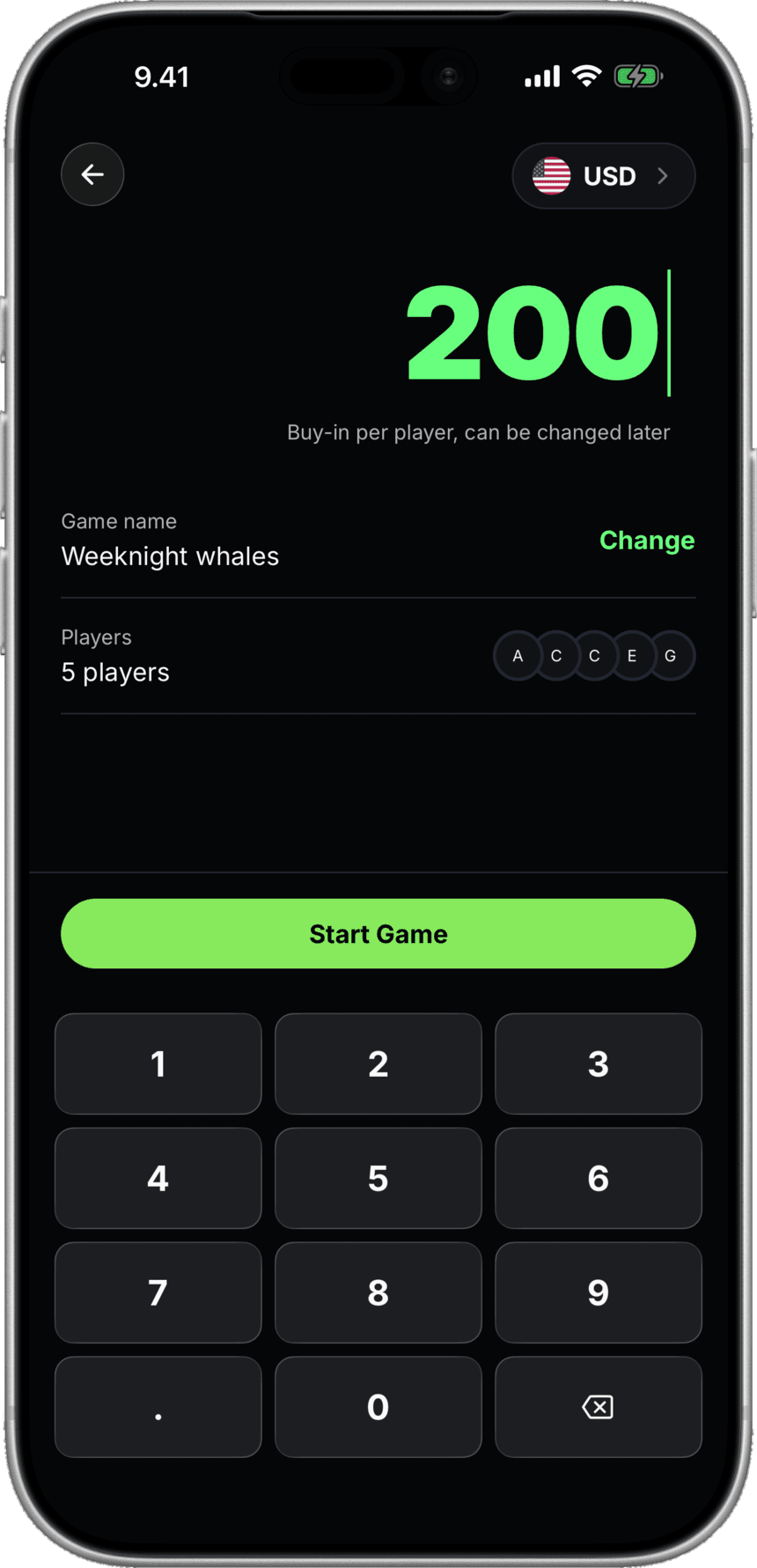
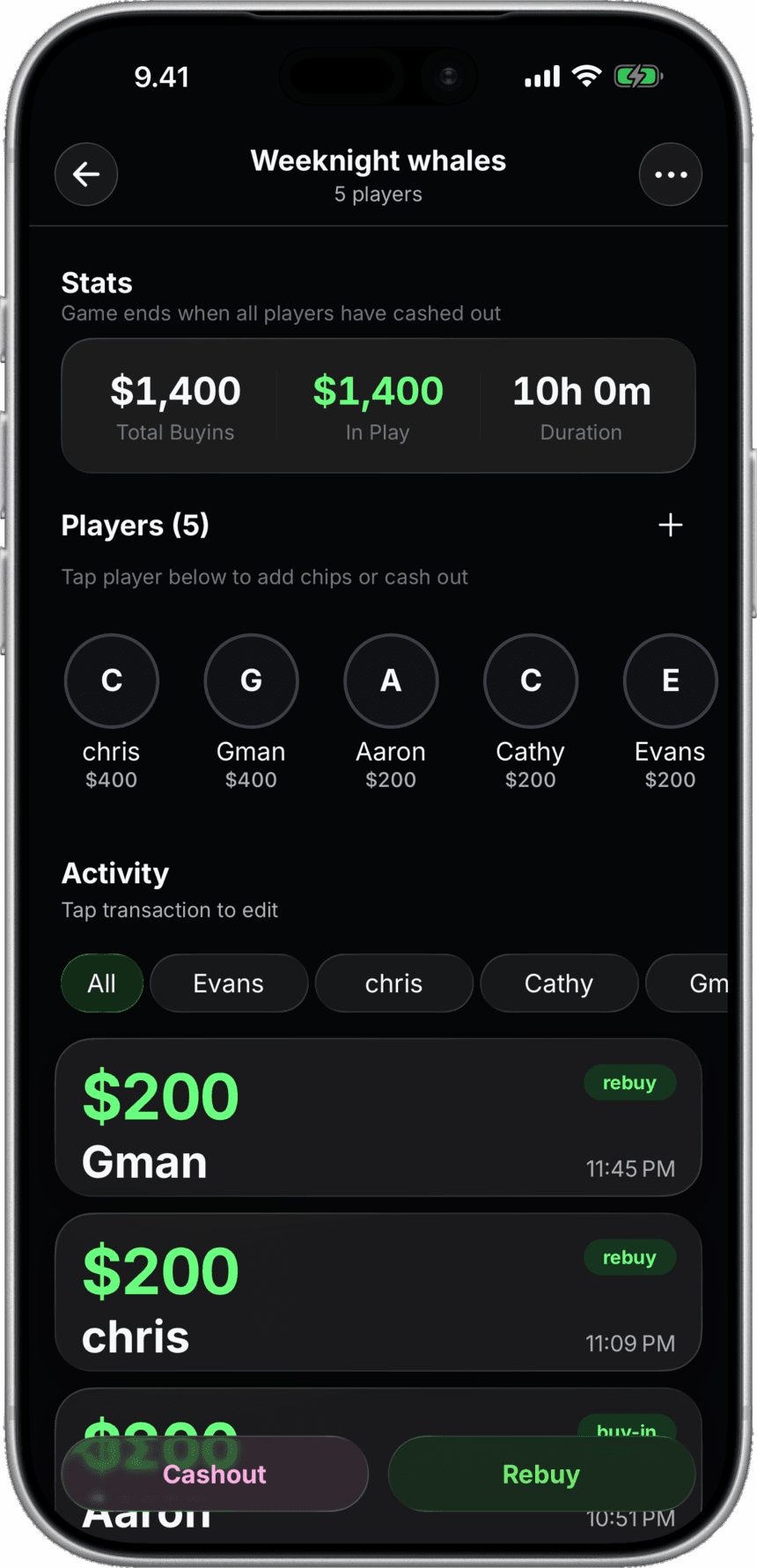
Pokertally covers the banker's job. Set the buy-in when you create the game, add players from your friends or as guests, and log every rebuy with a couple of taps. It can draw the dealer for you, and players can follow the game from a link on their own phone.
6. Settle Up Before Anyone Leaves
At the end, everyone counts their stack in front of the table. The total of all stacks has to match the total of all buy-ins. Each player's result is their final chips minus what they bought in for. Then losers pay winners directly, biggest loser to biggest winner first, so nobody has to pay through the host. Our guide to settling up a poker game walks through an example.
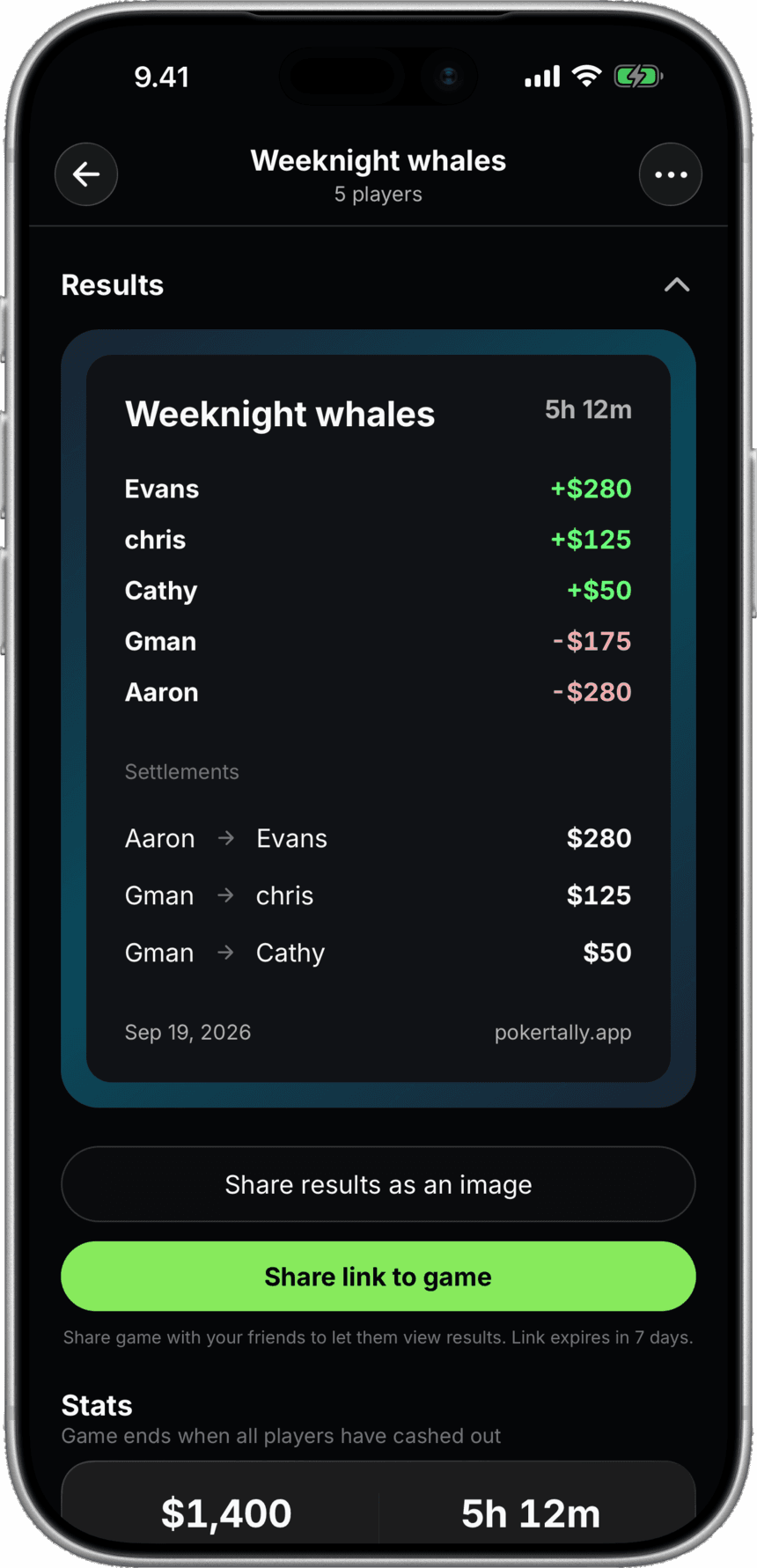
In Pokertally you enter the final chips, the app checks that they match the buy-ins and lists who pays whom. Share the results to the group chat as an image, and if the night runs late, let it remind you in the morning.
Let Pokertally Be the Banker
Track every buy-in and rebuy during the night, and know who pays whom the moment the last hand is dealt.

Free to join games. Hosting needs Pro: 30-day free trial, then $9.99/year.